


※この記事にはAmazonアソシエイトリンクを含みます
朝、いつものルーティンのストレッチで体をほぐしていました。
自分の太ももの前側の筋肉、大腿四頭筋(だいたいしとうきん)を伸ばしながら、(ちょっと固いんですよね私の筋肉・・・)ここの筋肉を馬の筋肉に例えるとって・・・と想像していたら、ふっと「馬って、本気で走り出すとき、体のどこからスイッチが入るんだろう…」
という問いがうかんだのでした。
筋肉は太いといいの?どうなの?細くてもしなやかな筋肉なら・・・等々。
最近よく競走馬のドラマのシーンかなにかで、ゲートを飛び出す馬たちの映像を眺めていたからかもしれません。
あの一瞬に凝縮された動きの連鎖が、頭のどこかに残っていたのかもしれません。
- ゲートが開くその時の馬の体はどう変わるのか
- 初めの一歩は“踏んでる”というより 地面をしならせて送り出す動き
- ギャロップの数歩が、いちばん美しいと感じる理由
- 走り出す馬の体を見ていると、自然とこちらの呼吸も変わる
- 初動が迷いなく見える理由は、体全体の流れがひとつに揃うからだと感じる
- まとめ:馬の動きを見ていると、毎回新しい発見がある
- うまzukiの参考にしているもの
- “It Starts Before the Start: The Truth About a Horse’s First Move”
- What happens to a horse’s body when the gate opens?
- The first step isn’t so much “stepping” as making the ground flex and launching
- Why the few steps before gallop are the most beautiful, I feel
- The reason the initial motion looks so confident is that the entire body’s flow aligns with one direction
- In summary: There is always a new discovery when you watch a horse’s movement
ゲートが開くその時の馬の体はどう変わるのか
ゲートが開く直前の瞬間、馬の体には独特の雰囲気があるように思います。
彼らの表情をみていると呼吸は浅く、胸の前で小刻みに揺れながらも、
後肢の飛節だけはわずかに深く折りたたまれ、力が底のほうへ沈んでいくように見える。
金属音とともにゲートが開くその瞬間、
最初に動くのは前脚ではなく、
後肢の“ばね”が静かにほどけるような、あの独特の伸び。
まるで、押し出すというより
体幹ごと前へ「解き放つ」 よう。
飛節の角度が一気に開き、
股関節の筋肉が波打つみたいに前へ力を送り、
その反動が背すじを通って首の付け根まで滑らかに抜けていく。
体全体がひとつの方向へ流れる瞬間です。
初めの一歩は“踏んでる”というより 地面をしならせて送り出す動き
一歩目の着地は驚くほど静かで、
それでいて確かに地面を捉えます。
前脚は地面を叩くわけではなく、
宙に描いた半円の延長線上へ、そっと置きにいくような動き。
そのとき肩甲骨の可動域が最大限に広がり、
胸前の筋肉がひと呼吸ごとに伸びて、縮んで、また伸びる。
そしてその着地にぴたりと重心が乗った瞬間、
後肢がまたひと押し分の力を送り込んでくる。
──あぁ、こうやって“走り”がつながっていくんだ、と見入ってしまいます。
ギャロップの数歩が、いちばん美しいと感じる理由
走り出してすぐのギャロップは、
まだ完全なリズム取れてる感じではなくて。
でもその“整いきる前の数歩”がたまらなく美しくて、
思わずスローで何度も見返してしまいます。
● 頸と肩の同調
首の根元がわずかに沈み、
その動きと完全に同調して肩が前に滑るように伸びていく。
● 背中の波
背中の筋肉がひとつの波のようになって、
力を前後に送りながら全身をしならせている。
脚だけが動いているわけじゃなく、
馬の体全体が“ギャロップのリズム”に寄っていく感じ。
● 後肢の踏み込みが音を変える
二歩目、三歩目と進むうちに、
地面を受ける音が「ドッ」という低い響きに変わっていく。
これは後肢の踏み込みが深くなり、
骨盤が前へ滑らかに倒れていくときの音なんじゃないかな…と感じます。
走り出す馬の体を見ていると、自然とこちらの呼吸も変わる
馬が前へ向かうとき、
呼吸のタイミングが脚とはっきりつながっていく瞬間をつかめたらいいのだろうとおもいます。
首が前に伸びたときに吸い、
後肢で押すときにゆっくり吐くようなリズム。
その“呼吸が動きを導くような瞬間”・・・
初動が迷いなく見える理由は、体全体の流れがひとつに揃うからだと感じる
ゲート発走の馬を見ているとわかるのは、
初動は脚だけで生まれているわけではないこと。
- 飛節のほどけ
- 股関節の伸び
- 背中のしなり
- 肩の滑り
- 頸の沈み
- 呼吸の波
これらすべてが ひとつの方向へ流れたとき、馬は“迷いのなく走りだす” のだろうなと感じてます。
まとめ:馬の動きを見ていると、毎回新しい発見がある
いろんな馬のいろんな発走を何度見ても、
毎回どこか新しい部分が目に入ります。
少しの角度の違い、
一歩目の重心、
呼吸の揺れ、
しなり方のわずかな変化。
馬の体は本当に繊細で、
それでいて驚くほどしなやかで強くて、
見れば見るほど「もっと見たい」と思わせてくれます。
練習では、
またもう少し近くで、丁寧に“最初の一歩”の気配を感じてみたいと思います。
うまzukiの参考にしているもの
私自身、馬と向き合うときに「なぜこう感じるのだろう」「どうしてこの行動が出るのだろう」と考える場面が多く、うまの筋肉のつきかた等、きになることばかり。
馬が世界をどんなふうに捉え、どんな要素で安心や不安を感じるのか。
その視点を丁寧に学べる内容で、日々のコミュニケーションを見直すきっかけにもなりましす。
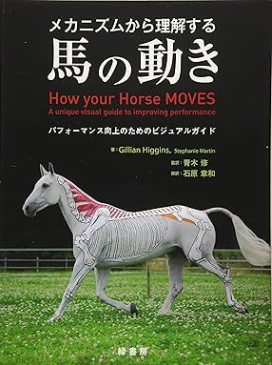
本の詳細はこちら
【Amazonで購入できます】
この本は馬の骨格と筋肉を描かれていて、馬の動きに応じて骨格と筋肉がどのような動きをするのかを視覚的にわかりやすく紹介されています。
日ごろの練習の際、馬にけがをさせないようにということにもつながりますし、何より骨格の動きがわかると面白い。
とはいえ、練習中にこのこと思い出せる余裕はないのだけど。
“It Starts Before the Start: The Truth About a Horse’s First Move”
This article contains Amazon Associate links.
In the morning, I was doing my usual routine stretch to loosen up my body.
While stretching the front of my thigh—the quadriceps (they’re a bit stiff for me…)—I found myself imagining: “If that muscle were like a horse’s muscle… then when a horse really takes off, where does the switch flip in its body?”
Is it better to have thick muscles? Or if the muscles are slim but flexible…? I wondered.
Maybe it was because I’d recently been watching scenes from racehorses in drama‑clips, bursting out of the gate. The image of that condensed chain of movements must have stayed somewhere in my mind.
What happens to a horse’s body when the gate opens?
In that moment just before the gate opens, I sense a distinctive atmosphere in the horse’s body.
Watching their expression, the breathing seems shallow, the chest trembling slightly in front, and at the same time the hocks of the hind legs are tucked a little deeper—so it looks as though the power is sinking toward the bottom.
At the sound of the metal gate opening, the very first movement isn’t from the forelegs—it’s as if the spring in the hind legs quietly uncoils.
Instead of pushing, the whole trunk seems to release forward.
The angle of the hocks suddenly opens wide, the muscles around the hip joint send power forward like a wave, and that reaction slides smoothly through the spine up to the base of the neck.
It’s the moment when the entire body flows in one direction.
The first step isn’t so much “stepping” as making the ground flex and launching
The very first landing is astonishingly quiet, and yet with a clear contact with the ground.
The foreleg doesn’t strike the ground; rather, it places itself gently as if extending from a semicircle drawn in the air.
At that moment, the scapula range of motion is maximized, the chest muscles lengthen and contract with each breath.
And the moment when the center of gravity lands perfectly on that step, the hind legs deliver another push of power.
—Ah, that’s how the run connects, I can’t help but be absorbed in it.
Why the few steps before gallop are the most beautiful, I feel
As the horse begins to run in earnest, the gallop is not yet in a fully settled rhythm.
And yet those few steps before everything is “in order” feel unbelievably beautiful, and I find myself replaying them slowly again and again.
- Neck and shoulders synchronizing
The base of the neck sinks slightly, and in perfect sync the shoulder slides forward and stretches. - The wave in the back
The back muscles become like a single wave, sending power front and back as the whole body flexes. - The sound of the hind‑leg push changes
As the second and third steps go by, the ground‑contact sound turns into a low “thud”.
I feel that this happens when the hind‑leg push gets deeper, and the pelvis slides smoothly forward.
Watching a horse’s body taking off makes me unconsciously change my own breathing.
When the horse thrusts forward, if you could catch that moment when the breath is clearly tied to the legs…
When the neck stretches forward you inhale, and when the hind legs push you breathe out slowly—that kind of rhythm.
The reason the initial motion looks so confident is that the entire body’s flow aligns with one direction
Watching the gate‑start of a horse reveals that the initial motion isn’t produced by the legs alone.
The uncoiling of the hocks, the opening of the hip joint, the flexing of the back, the sliding of the shoulder, the sinking at the base of the neck, the wave of breath—when all of these flow toward one direction, that’s when the horse runs off without hesitation.
In summary: There is always a new discovery when you watch a horse’s movement
No matter how many times I watch various horses’ starts, each time I notice something new.
A slight difference in angle, the center of gravity in the first step, the sway of the breath, a tiny change in the flex.
A horse’s body truly is delicate, yet astonishingly flexible and strong—and the more I watch, the more I want to watch again.
In my practice I’d like to try to observe more closely, more mindfully the sign of that first step.
Books I refer to in my “horse‑loving” practice
When I myself face a horse, I often ask: “Why do I feel this way?” “Why does this behavior occur?”
I’m always curious about how a horse’s muscles attach, how it perceives the world, what elements make it feel safe or uneasy.
That perspective helps me review our daily communication as well.
Here are the details of the book (Available from Amazon)
This book draws the horse’s skeleton and muscles and visually shows how the skeleton and muscles respond to the movements of the horse.
In daily practice, it links to avoiding injuries in the horse, and above all if you understand how the skeleton moves, it becomes fascinating.
That said, I don’t always have enough composure during practice to remember all of this.
コメント