Listening to the Heart of a Horse
A Warm Everyday Reflection Inspired by a Book on Horsemanship
- Introduction|Why Being with Horses Somehow Calms the Heart
- A Horse’s Eyes, Ears, and Breath|Communication Without Words
- Horsemanship Is Not About Control, but Understanding
- When Horses Can Be Horses, Humans Can Become More Human Too
- The Gentle Relationship Taught by Uma no Kokoro
- Closing|Maybe a Gentle World Begins with Moments Like This
Introduction|Why Being with Horses Somehow Calms the Heart
A little while ago, a drama featuring horses was being talked about quite a lot in Japan.
On social media, I’ve also started seeing more comments like, “Horses are so cute,” and “They’re so healing.”
And of course, horses truly are adorable.
But I feel that the charm of horses cannot be fully expressed with just that one word.
Their quiet eyes.
Their gently moving ears.
Their slow, steady breathing.
Even when they are simply standing there, horses have a mysterious presence that seems to change the pace of a person’s heart.
In my daily life, I often try to value these feelings:
“To be my true self.”
“To stay as I am.”
Rather than trying too hard to become someone else, or forcing myself to be something I am not, I believe that relaxing my shoulders and simply being myself may be one of the greatest forms of happiness.
But without realizing it, we humans tend to try too hard.
I have to do things properly.
I have to meet everyone’s expectations.
I have to do better.
When our hearts become a little stiff from thoughts like these, being near a horse somehow allows our breathing to soften.
“It’s okay to be just as you are.”
Horses do not speak, and yet I feel as if they quietly offer that kind of atmosphere.
When I face a horse, there are moments when I feel as though my own emotions are being seen right through.
When I am rushing, it feels as if the horse is saying, “Slow down a little.”
When I am trying too hard, it feels as if the horse is telling me, “You don’t have to work so hard.”
And horses themselves are not trying to become something else.
They are simply there, naturally, as horses.
When I see that, I find myself thinking:
“A world where horses can simply be horses must be a gentle world.”
While I was thinking about my time with horses, I came across a book called Uma no Kokoro — Horse Brain, Human Brain: The Neuroscience of Horsemanship
Through the idea of horsemanship, this book quietly speaks about a relationship where horses can be horses, and humans can be humans.
Today, I would like to write a little about what I felt while reading this book.
A Horse’s Eyes, Ears, and Breath|Communication Without Words
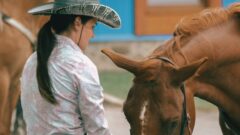
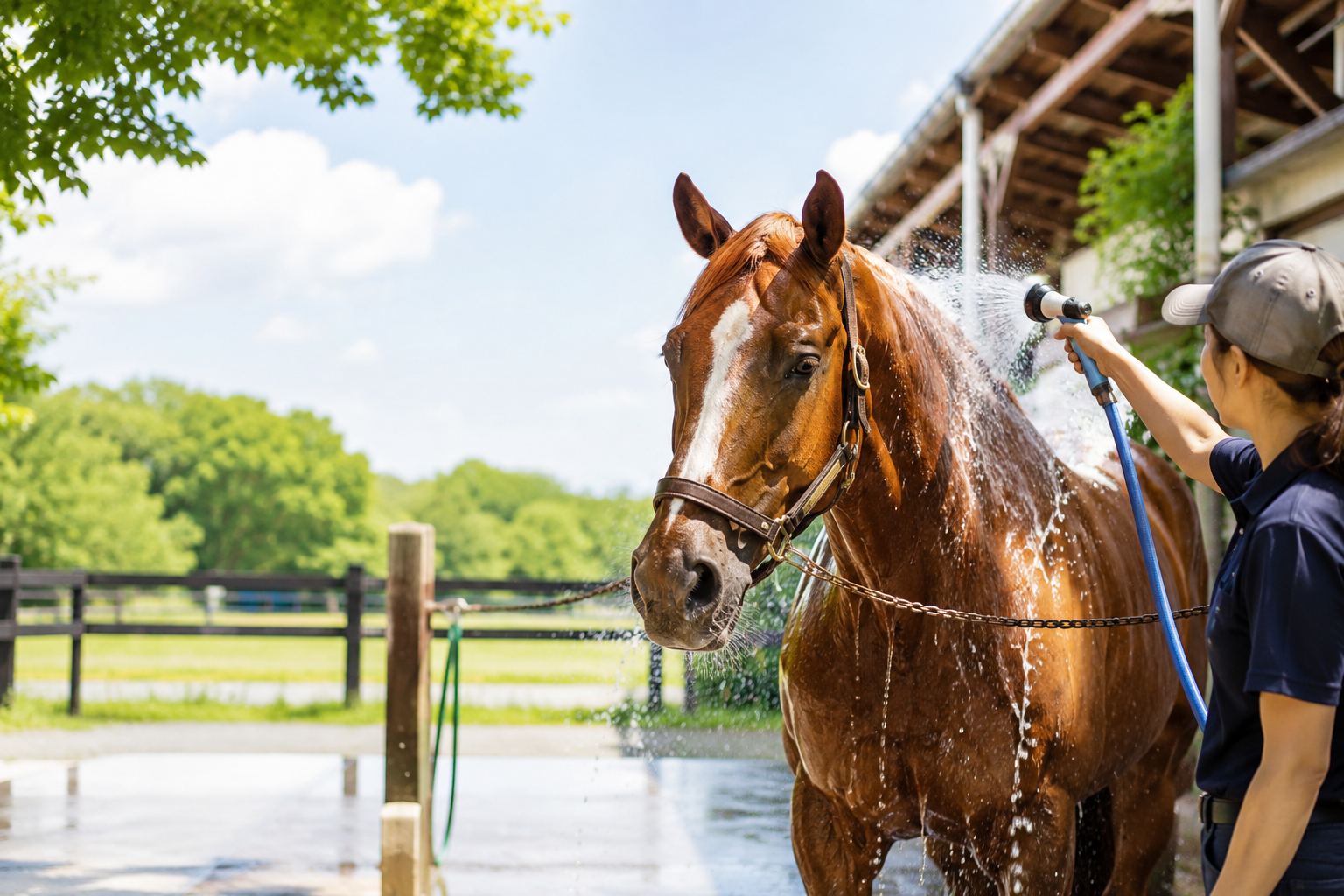
When I look into a horse’s eyes, I somehow become calmer too.
Their large, honest eyes are not only gentle, but also incredibly sensitive.
It feels as if they can sense the atmosphere around them, and even the emotions of the person standing before them.
When they are a little nervous.
When they feel safe.
When they are cautious.
Horses show all of these feelings through their eyes and expressions.
Their ears are also wonderfully honest.
They turn forward, move backward, relax to the side.
Through even the smallest movements, they tell us how they are feeling in that moment.
Horses do not speak in words, and perhaps that is why there is no falsehood in them.
Maybe that honesty is one of the reasons people are so drawn to them.
And then there is their breathing.
When I am near that slow rhythm, I feel as if my own heart and body begin to settle.
In the middle of busy everyday life, the time I spend near horses feels as though it flows a little differently.
The word “healing” does not seem quite enough.
I believe horses have a quiet power to calm the human heart.
Horsemanship Is Not About Control, but Understanding
When I first heard the word “horsemanship,” I vaguely imagined it as a technique for handling horses well.
But as I continued reading Uma no Kokoro, that impression changed greatly.
What matters in horsemanship is not, “How can I make the horse obey?”
Instead, the question at the center is:
“How can I help the horse feel safe?”
Do not rush them.
Do not frighten them.
Do not force them.
Face the horse at a pace they can understand, and at a distance where they can feel secure.
I felt that this attitude applies not only to relationships with horses, but also to relationships between people.
Rather than trying to change the other person, first create an atmosphere where they can feel safe.
That alone can slowly begin to change a relationship.
Through communication with horses, horsemanship may also teach us something about how to be as human beings.
When Horses Can Be Horses, Humans Can Become More Human Too
I love the atmosphere of a horse when it feels safe.
It exhales softly, its ears relax to the side, and the tension leaves its body.
When I see that, even the part of me that has been thinking, “I have to do everything properly,” begins to loosen a little.
Maybe people are the same.
When we have a place where we feel safe, we naturally begin to return to who we really are.
I believe that being our true selves may be happiness in its deepest sense.
But in reality, we sometimes adjust ourselves to those around us, push ourselves too hard, and drift a little away from who we truly are.
At times like that, horses seem to reflect our present state in a mysterious way.
When we are forcing ourselves, they may become unsettled.
When we are calm, they often seem to feel safe too.
I do not think horses are trying to heal people.
They are simply there, naturally, as horses.
But that natural presence quietly brings the human heart back into balance.
Perhaps “listening to the heart of a horse” also means returning to our own humanity.
This is something I have gradually come to feel through the time I spend with horses.
The Gentle Relationship Taught by Uma no Kokoro
While I was thinking about these things, I came across the book Uma no Kokoro.
Although it is a book about horse behavior and horsemanship, reading it somehow made me feel as if my own heart was being gently put in order.
“So this is how horses see the world.”
There were many moments when I felt that way.
With each page, my view of horses began to change little by little.
What left the strongest impression on me was the way the book approaches horses not as beings to be controlled, but as beings to be understood.
I felt that this way of relating is not limited to horses.
It also connects to our relationships with other people, and even to the way we face ourselves.
Of course, I think this book will be meaningful for people who spend time with horses.
But I also feel that it can gently support anyone who feels a little tired in the busyness of everyday life.
If you have ever thought:
I want to understand horses more deeply.
I want to learn about horsemanship.
I want to value my relationship with horses more.
I want to return, even just a little, to my true self.
Then I believe Uma no Kokoro may be a book that quietly stays beside you.
I am sharing this recommendation not because I want to push it on anyone, but because I hope it gently reaches the people who may need it.
I simply hope it reaches the people who need it.
Closing|Maybe a Gentle World Begins with Moments Like This
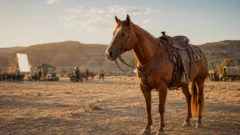
Horses do not do anything extraordinary.
They are simply there, breathing naturally.
And yet, their presence slowly changes something in the human heart.
When horses are allowed to be horses, perhaps humans can also become more human.
I want to continue valuing the moments when I can simply be myself, just as I am.
And I hope that this kind of gentle world will slowly continue to spread.
コメント